
The mistake most homeowners make this time of year is Googling "how to winterize a garage door" and following advice written for places that get snow. It's tempting because those checklists are everywhere and they sound thorough — insulate the panels, weatherproof against freezing, protect the opener from ice. None of that is wrong exactly, it's just mostly irrelevant here. Moore Haven doesn't get hard freezes that crack seals or ice that jams tracks. What it does get is a long, humid storm season that just ended, salt-tinged air if you're anywhere near the water side of the county, and a dry season now rolling in that will shrink and shift everything that swelled over the summer. That's the real winter prep.
What a Glades County Winter Actually Does to a Garage Door
Our "winter" isn't a season of cold so much as a season of drying out. After months of afternoon downpours and heavy humidity, wood panels, weatherstripping, and even some composite doors have absorbed moisture and swollen slightly. As temperatures drop and the air dries, that material contracts again. You'll often notice this as a door that suddenly closes easier than it has in months, or conversely, one that now has a visible gap it didn't have in August. Metal components react too — hinges, tracks, and springs that were sitting in damp air all summer may now show the rust that was forming quietly the whole time, and it becomes more obvious as surface moisture evaporates.
Do a Post-Storm-Season Walkthrough First
Hurricane season technically wraps up at the end of November, which makes right now the ideal window to check for damage you may have missed during an active storm. Wind-load stress doesn't always announce itself immediately — a door can take a hard gust and still operate, but with bent track brackets, stressed cables, or loosened fasteners that only fail months later.
- Walk the full length of both tracks and look for bends, gaps at the wall, or brackets that have pulled loose
- Check the bottom corners of the door for scraping or denting from debris impact
- Look at cable ends near the bottom brackets for fraying strands, not just obvious snaps
- Test the door's reversal safety feature by placing a block in its path and confirming it stops and reverses
Deal With Rust Before It Spreads
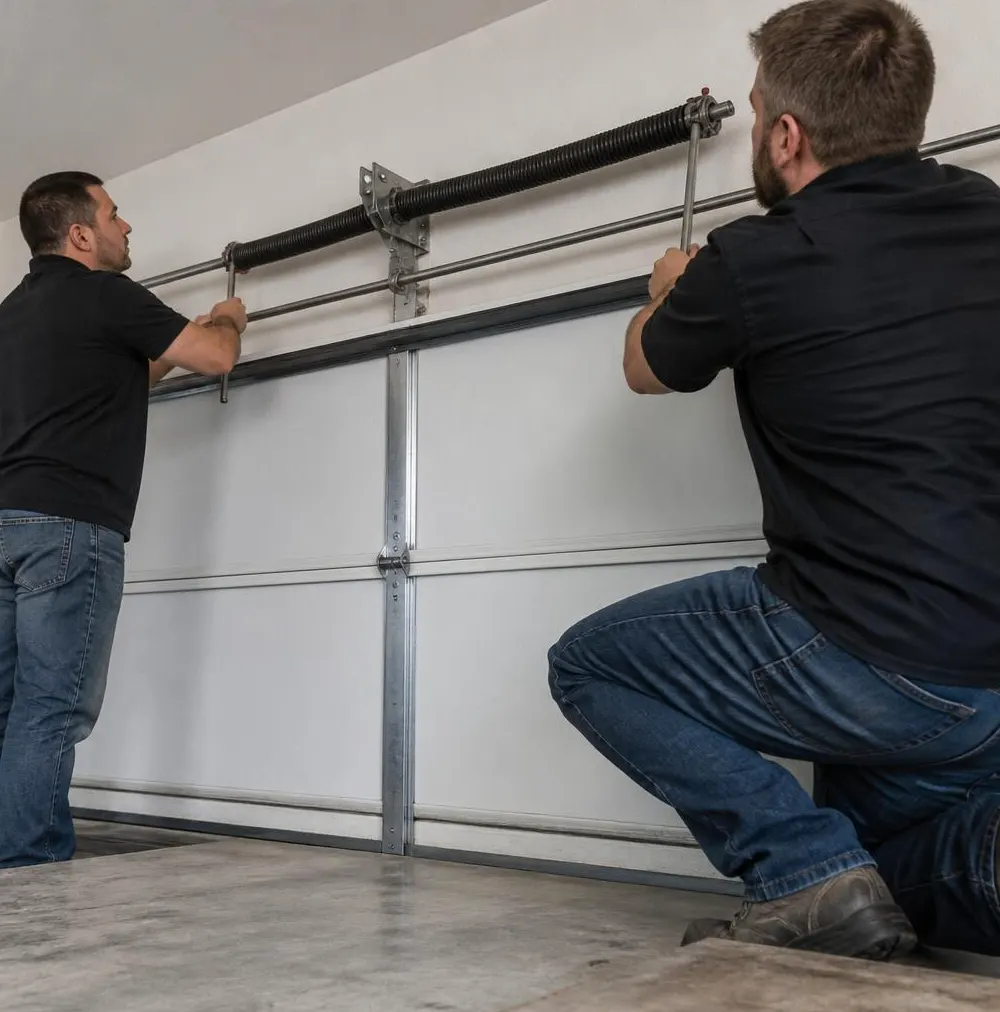
Humidity plus salt air is a rust accelerant, and springs, rollers, and hinges are the first parts to show it. Surface rust on a spring looks cosmetic but it's not — it eats into the coil and weakens it unevenly, which is how you end up with a spring that snaps without warning instead of wearing out predictably. Run a cloth over every spring coil and hinge pin. Light surface rust can be cleaned and then protected with a silicone-based lubricant (skip WD-40 for long-term protection — it's a solvent, not a lubricant, and it attracts dust). If you see flaking, pitting, or a spring coil that looks thinner in spots, that's a job for a professional, not a DIY fix, given how much tension these parts hold.
Check Weatherstripping and Door Seals
As the door's material contracts in drier air, the rubber seal along the bottom and sides may no longer sit flush the way it did a few months ago. Gaps here let in cooler morning air, dust, and the occasional curious gecko, but more importantly they're an early sign that the door itself has shifted slightly on its track or that the seal has worn thin from a summer of expansion and contraction. Run your hand along the bottom seal for cracking or flattening, and check the vertical seals where the door meets the frame.
Tighten Hardware and Recheck the Opener
Vibration from months of regular use, plus the swelling-and-shrinking cycle, works fasteners loose over time. Go around with a socket wrench and snug up hinge bolts, track bracket bolts, and the bolts on the opener's mounting rail. While you're in there, listen for new grinding or popping sounds during operation — these often show up first in cooler, drier weather as components settle into their new dimensions.
When to Call Moore Haven Garage Door Service
If your walkthrough turns up rusted or uneven spring coils, frayed cables, or a track that's visibly bent from storm-season wind load, stop there and call us rather than pushing forward yourself — these are high-tension components and the wrong move can cause real injury. We handle Garage Door Spring Repair and Garage Door Cable Repair regularly this time of year specifically because of what a wet summer does to metal hardware, and if it's been a while since your last checkup, our Garage Door Maintenance & Tune-Up covers the full inspection, lubrication, and hardware adjustment in one visit.
If you're in Moore Haven, Clewiston, LaBelle, Palmdale, Lakeport, Okeechobee, Lehigh Acres, or Belle Glade and your garage door needs a post-storm-season once-over, call Moore Haven Garage Door Service today and get it handled before the dry season finds every loose bolt and rusty hinge for you.