
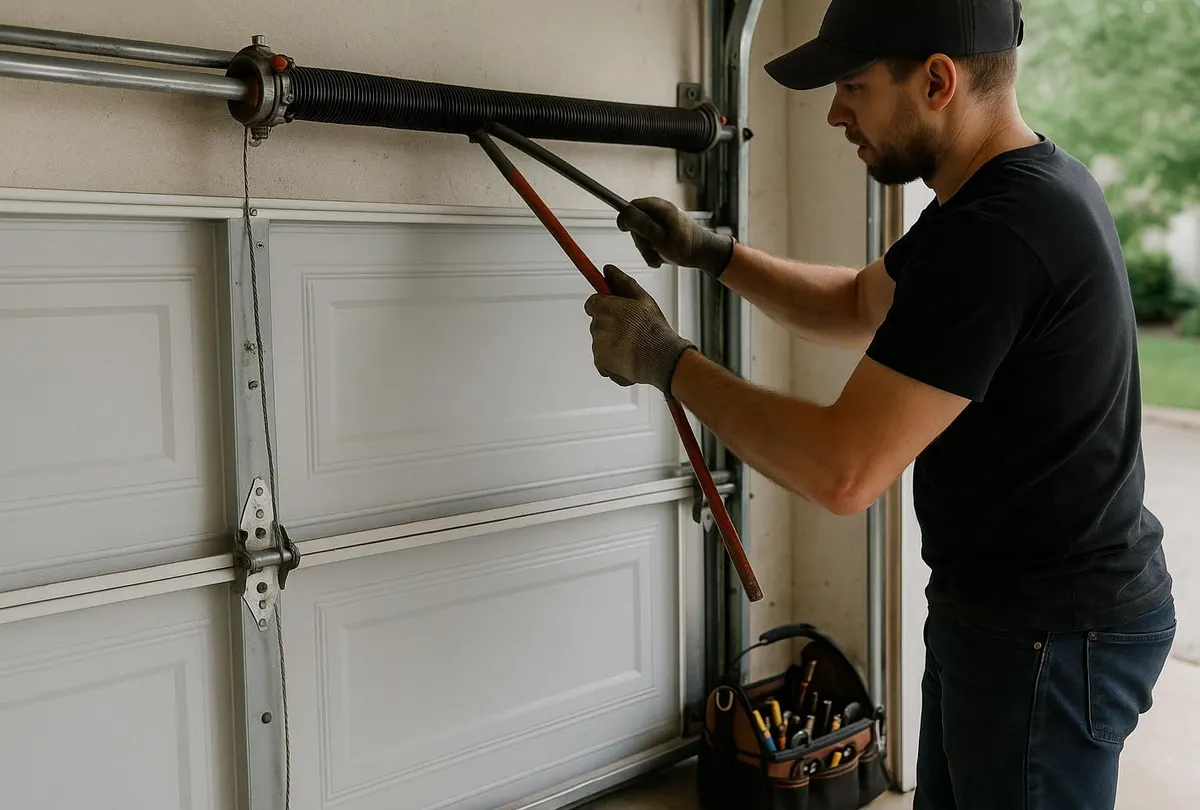
The Moment You Notice Something's Off
It usually happens on an ordinary morning. You hit the button, and the opener lets out a groan it didn't used to make. Or maybe the door doesn't glide down smoothly anymore — it drops the last foot or two with a thud instead of settling into place. You tell yourself it's nothing, but a week later the opener is straining harder, the motor runs longer, and you start wondering if you're about to be stuck with a door that won't open at all.
Before you assume the opener is dying, there's a simpler explanation worth ruling out: the door itself may be out of balance. In Glades County's climate, that's more common than people think. Humidity swells wood and composite panels, salt-tinged air off the lake and nearby coastal routes works on cables and spring coils over time, and the heavier, wind-rated doors many homes here use to meet storm demands put more load on aging springs than lighter doors do. When the springs can no longer carry their share of the door's weight, the opener picks up the slack — and it wasn't built to be a permanent workhorse.
What an Unbalanced Door Does to Your Opener
A properly balanced garage door is designed so the springs do almost all the lifting. The opener's motor should only need to guide the door along the track, not haul its full weight. When springs weaken or lose tension, the opener has to compensate every single time it runs. Over weeks and months, that extra strain shows up as:
- Longer open/close times and a louder, more labored motor sound
- Premature wear on the drive gear, belt, or chain
- The door reversing unexpectedly because the opener's safety sensors read the extra resistance as an obstruction
- A shortened lifespan for a motor that would otherwise run for years
Left unaddressed, this usually ends one of two ways: the opener burns out early, or the door's cables and springs fail suddenly — sometimes with the door slamming down hard enough to damage the track or whatever's underneath it.
Tools You'll Need
- A sturdy step ladder
- Work gloves
- A flashlight
- A helper, if possible (not required, but useful)
You will not need wrenches, spring tools, or anything that puts you near the torsion spring itself. This test is about observation, not adjustment.
Step-by-Step: Testing Your Garage Door's Balance
- Close the door completely. Start from a fully closed position so you have a consistent baseline.
- Locate the manual release cord. This is usually a red handle hanging from the trolley on the opener rail. Pull it to disconnect the door from the opener. From this point on, you're moving the door by hand only.
- Lift the door manually to about waist height. Use both hands and lift slowly and evenly, watching for resistance or grinding.
- Let go and watch what happens. A well-balanced door will stay roughly where you left it, or drift down slowly. A door that's out of balance will either fall quickly or fly upward on its own — both are signs the springs are no longer matched to the door's weight.
- Repeat the test at a few different heights — roughly a quarter open, halfway, and three-quarters open. Torsion springs don't always behave the same way at every point along the track, so testing multiple positions gives you a clearer picture.
- Watch and listen for binding. As you raise and lower the door by hand, note any spots where it catches, grinds, or feels uneven. This can point to a bent track or worn rollers in addition to a spring issue.
- Reconnect the opener when you're done. Pull the release handle again (or follow your opener's manual) to re-engage the trolley. Don't leave the door running on manual release — it defeats the opener's safety reversal features.
What You Can Safely Check — and What's a Technician's Job
Homeowners can reasonably handle the balance test above, along with a few related checks: looking over the tracks for rust or dents, listening for grinding during manual movement, checking cables for visible fraying, and keeping rollers and hinges lubricated with a garage-door-specific lubricant (not WD-40, which washes out grease and attracts grit).
What's not a DIY job is anything involving the springs themselves. Torsion springs are wound under extreme tension — enough to cause serious injury if handled incorrectly — and adjusting or replacing them requires the right tools and experience. The same goes for frayed or snapped cables, bent track sections, and opener force settings that need recalibrating after a spring change. If your balance test shows the door moving on its own instead of staying in place, that's your sign to stop testing and call for a professional inspection.
When to Call Moore Haven Garage Door Service
If your door fails the balance test, or you've noticed the opener working harder over the past few weeks, it's worth having it looked at before a spring fails outright. Our Garage Door Spring Repair service includes checking spring tension against your door's actual weight, inspecting for the corrosion that salt air and humidity cause over time, and replacing springs rated appropriately for wind-load-rated doors common in this area. If it's been a while since anyone's looked at your rollers, cables, and track, our Garage Door Maintenance & Tune-Up covers all of it in one visit, so small issues get caught before hurricane season storms put extra strain on a door that's already working too hard.
If your garage door in Moore Haven, Clewiston, LaBelle, or anywhere else in Glades County is giving your opener a harder time than it should, give Moore Haven Garage Door Service a call. We'll check the balance, fix what's actually wrong, and make sure your opener isn't doing a spring's job.