
Rule of thumb: if your garage door is stuck or sluggish on a cool morning in Moore Haven, it's almost certainly moisture and rust, not ice. Glades County doesn't get hard freezes most years, so a door that acts "frozen" is reacting to humidity, condensation, and overnight dew more often than actual sub-freezing temperatures.
The exceptions matter, though. A handful of nights each winter — usually in January — can drop close to or just below freezing here, especially on clear, still nights that let heat radiate off the ground fast. If your door sat in a puddle from an afternoon downpour and the temperature dipped overnight, a thin skin of ice between the bottom seal and the slab is possible. It's rare, but it happens, and it's worth ruling out first because it's the easiest fix.
Symptoms to Notice Before You Call Anyone
- Door won't move at all when you hit the opener button, and the motor hums or strains without lifting it.
- Opener reverses immediately after barely cracking the door open, as if something is holding it down.
- Door moves but drags along the bottom, leaving a scraped or torn rubber seal behind.
- Visible frost, dew, or a thin ice film along the bottom weatherstrip on an unusually cold morning.
- Grinding or squealing from the tracks that wasn't there in warmer weather.
- Rust streaks on the tracks, hinges, or bottom bracket that weren't noticeable a few months ago.
What a Technician Checks First, and in What Order
1. The Bottom Seal and Slab
This is the first thing worth checking yourself, before anything else. If the rubber seal froze or just dried onto the concrete overnight, a gentle push while the opener pulls can usually break it free. Pouring warm (not hot) water along the seal line helps loosen a true ice bond. If this keeps happening, the fix is usually re-grading the slab slope slightly or replacing a seal that's stiffened and lost its flex from sun and heat cycling.
2. Track Alignment and Rust on the Rollers
Humidity swings are constant in this part of Florida, and condensation on steel tracks invites surface rust, especially if the garage isn't fully sealed from salt-tinged air moving up from the coast. Rust on the rails or rollers increases friction, which feels exactly like a "stuck" door on a cold morning because cold metal contracts slightly and tightens tolerances that were already marginal. The fix is cleaning the rust off the tracks, realigning any section that's bowed, and applying a silicone-based lubricant — not WD-40, which attracts dust and grime in this climate.
3. Spring Tension
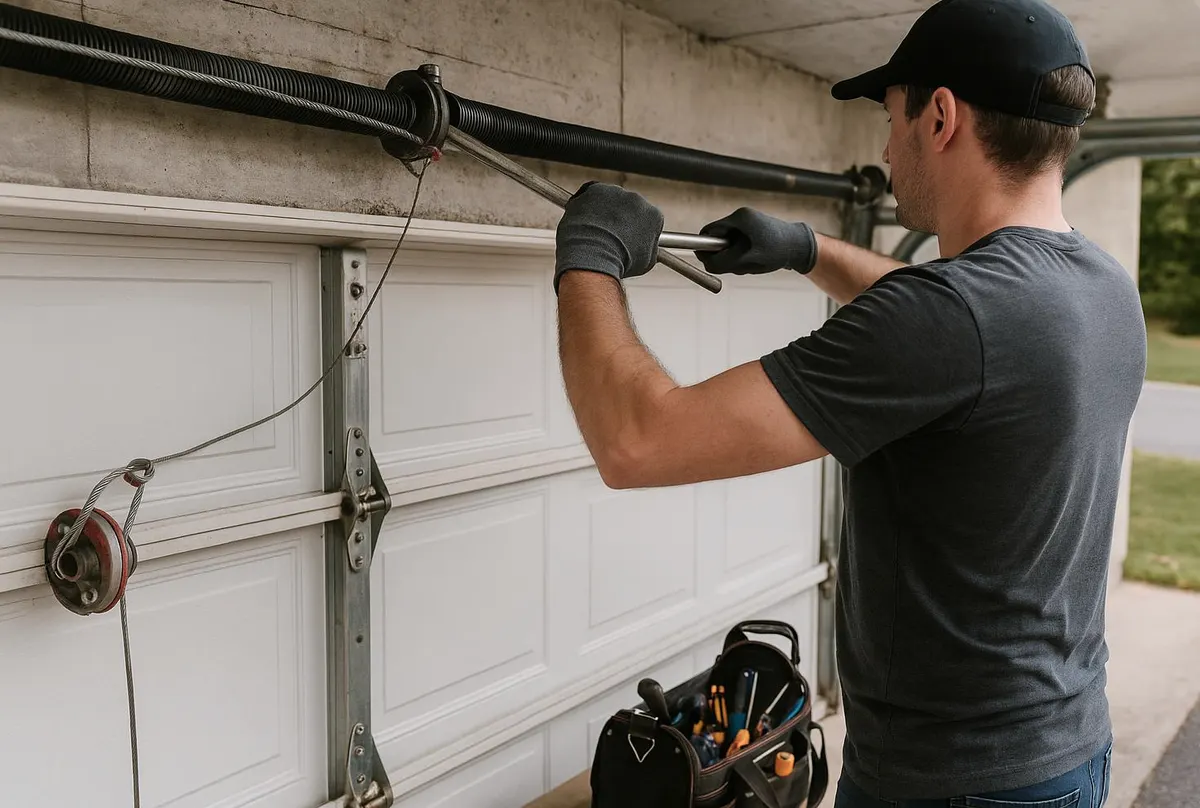
Torsion springs lose a small amount of lift capacity as metal contracts in cooler air. On a door that was already borderline — springs nearing the end of their lifespan or sized a little light for the door's weight — that small change is enough to make the door feel heavy or stall partway up. This isn't a DIY adjustment; it requires a technician to reset spring tension safely, and it's often the real reason a door feels fine in July but struggles in December.
4. Opener Force and Limit Settings
If the door is binding anywhere in the first three checks, the opener's safety sensors will read that resistance and reverse the door to prevent injury — which is often mistaken for the opener itself malfunctioning. Once the mechanical issues are fixed, the force and travel limits usually need to be reset so the opener isn't overcompensating for a problem that no longer exists.
5. Cables and Pulleys
Moisture exposure over a humid summer can leave lift cables with surface corrosion, which shows up as fraying strands or a cable that's started to jump its pulley groove. A door that moves unevenly, with one side lifting before the other, usually points here. Cable replacement is inexpensive compared to the spring and opener damage that can follow if a frayed cable snaps under tension.
6. Wood Swelling or Panel Warping
If you've got an older wood-composite door, humidity swelling is a slower, separate issue from cold-morning stiffness, but the two compound each other. Panels that have absorbed moisture all summer swell against the frame, and a cooler, drier morning can make that mismatch more obvious as the door tries to seat. Sanding and resealing buys time; a swollen door that's warped badly is usually a sign it's time to talk about a wind-rated replacement suited to storm season rather than another repair.
When to Call Moore Haven Garage Door Service
If your door is scraping, dragging, reversing on its own, or visibly dragging rust onto the slab, it's past the point of a garden-hose fix. We'll run through the same checklist above — starting with Off Track Door Repair if the rollers have jumped the rail, and Garage Door Maintenance & Tune-Up to clean, realign, re-lubricate, and reset the opener's limits so it's not fighting itself. If a cable looks compromised, we'll handle that the same visit rather than letting it become a bigger failure later.
Call Moore Haven Garage Door Service today if your door is sticking, dragging, or struggling on cool mornings — we serve Moore Haven, Clewiston, LaBelle, and the surrounding Glades County area, and we'll get it moving the right way, not just the fast way.